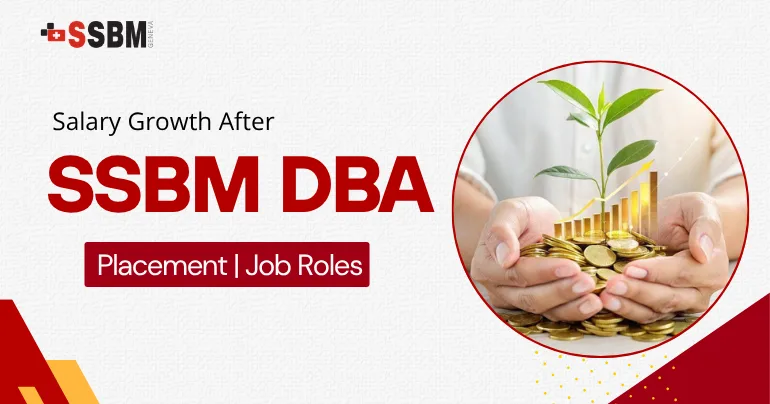
In today’s competitive job market, many professionals feel that career growth becomes slow after a certain point. Even with years of experience, moving into higher positions or increasing salary is not always easy. That’s where advanced qualifications like a DBA (Doctor of Business Administration) start becoming important. The SSBM DBA (Swiss School of Business and Management) is one such program that is attracting attention in 2026. It is specially designed for working professionals who want to improve their knowledge, move into leadership roles, and increase their earning potential. But the biggest question people have is — does it really help in salary growth? In this blog, we will understand salary growth after SSBM DBA, along with placement opportunities, job roles, and long-term career benefits in a simple and realistic way.
What is SSBM DBA?
The SSBM DBA is a professional doctoral program focused on real-world business application and leadership development.
Unlike a PhD, which is more theoretical and research-heavy, the DBA is practical. It is designed for professionals who want to apply their knowledge directly in business environments.
The program usually follows a flexible format, allowing students to continue their job while studying. This is one of the main reasons why working professionals prefer it.
Why Professionals Choose SSBM DBA
After working for a few years, many professionals reach a stage where growth becomes limited. They may have good experience, but without an advanced qualification, it becomes difficult to move ahead.
This is where a DBA helps.
- It improves decision-making and strategic thinking
- It adds strong credibility to your profile
- It helps in moving into leadership roles
At the same time, it is important to understand that the degree alone does not guarantee success. Your skills, experience, and effort also play a major role.
Salary Growth after SSBM DBA
Salary growth after completing a DBA depends on various factors like experience, industry, and role. However, many professionals do experience a significant increase in their earning potential.
Estimated Salary Comparison
| Experience Level | Before DBA (₹) | After DBA (₹) |
| Mid-Level (5–10 yrs) | ₹6 – ₹12 LPA | ₹10 – ₹20 LPA |
| Senior Level (10+ yrs) | ₹12 – ₹25 LPA | ₹18 – ₹40 LPA |
| Leadership Roles | ₹20+ LPA | ₹30+ LPA |
In most cases, salary growth happens because professionals move into higher roles rather than just getting a raise in the same position.
Also, the growth is not always immediate. Sometimes it takes time, but the long-term benefits are usually strong.
What Actually Drives Salary Increase?
Many people think that just completing a DBA will automatically increase their salary, but that is not always true.
Some key factors that influence salary growth include:
- Your previous work experience
- Industry you are working in
- Your ability to apply what you learned
- Networking and professional connections
For example, someone with 10+ years of experience may see faster growth compared to someone with less experience.
Also, industries like consulting and IT usually offer better salary growth compared to others.
Placement Opportunities after SSBM DBA
One important thing to understand is that SSBM DBA does not follow traditional campus placements like regular college programs.
Since most students are already working professionals, the focus is more on career advancement rather than placements.
Professionals usually use the DBA to:
- Get promoted within their current company
- Switch to better job roles
- Build strong professional networks
In fact, networking plays a very important role here. Many opportunities come through connections rather than formal placements.
Job Roles after SSBM DBA
After completing the DBA, professionals can move into more advanced and strategic roles.
Some of the common job roles include:
- Senior Manager or General Manager
- Business Consultant
- Strategy Manager
- Director or Vice President roles
In these roles, professionals are more involved in decision-making rather than just execution.
Some people also choose to move into academic roles or start their own consulting business.
Industries Offering Higher Salaries
Certain industries tend to offer better salary growth after completing a DBA.
These include consulting, finance, IT, healthcare management, and corporate strategy. These industries value advanced skills and leadership abilities.
However, it is important to remember that your personal experience and background matter more than just the degree.
Career Growth after SSBM DBA
The biggest advantage of a DBA is not just salary increase, but overall career growth.
It helps professionals move from operational roles to strategic roles. Instead of just managing tasks, you start making decisions that impact the business.
It also improves skills like:
- Leadership
- Communication
- Problem-solving
- Analytical thinking
These skills are very important for long-term success.
But again, growth takes time. It does not happen overnight.
Challenges You May Face
While the DBA has many benefits, there are also some challenges.
First, balancing work and study can be difficult. Many professionals struggle with time management in the beginning.
Second, the program requires consistency. Without regular effort, it becomes hard to complete.
Also, some people expect immediate results, which may not always happen.
Understanding these challenges early can help you prepare better.
Is SSBM DBA Worth It for Salary Growth?
This depends on your expectations and goals.
If you are looking for a quick salary increase, then this program may not give immediate results.
But if you are focused on long-term growth, leadership roles, and career development, then it is definitely worth it.
The DBA helps in building a strong foundation, but your success depends on how you use it.
Common Mistakes to Avoid
Many professionals make some mistakes while pursuing a DBA.
One common mistake is expecting instant results without effort.
Another is not aligning the program with career goals. If your goals are not clear, you may not get the desired results.
Also, ignoring networking is a big mistake. Building connections can open many opportunities.
Avoiding these mistakes can make a big difference.
Conclusion
The salary growth after SSBM DBA is not just about the degree itself, but about how you use it in your career.
While it may not guarantee immediate salary increase, it provides a strong platform for long-term growth. It helps professionals move into leadership roles, improve their skills, and gain better opportunities.
If you are ready to put in the effort and stay consistent, the SSBM DBA can be a valuable investment for your future, even though the journey may feel a little challenging at times.
Frequently Asked Questions
1. Does SSBM DBA guarantee salary growth after completion?
No, it does not guarantee immediate increase, but it improves chances of better roles and long-term salary growth.
2. What is the average salary after SSBM DBA?
Salary depends on experience, but many professionals earn between ₹10 LPA to ₹30 LPA or even higher.
3. Are there placement opportunities in SSBM DBA?
The DBA program focuses more on career advancement rather than campus placements since most students are already working professionals.
4. Which job roles can I get after SSBM DBA?
You can move into roles like senior manager, consultant, strategist, or leadership positions based on your experience level.
5. Is SSBM DBA useful for long-term career growth?
Yes, it helps build leadership skills, improve credibility, and supports better career opportunities over a longer period.